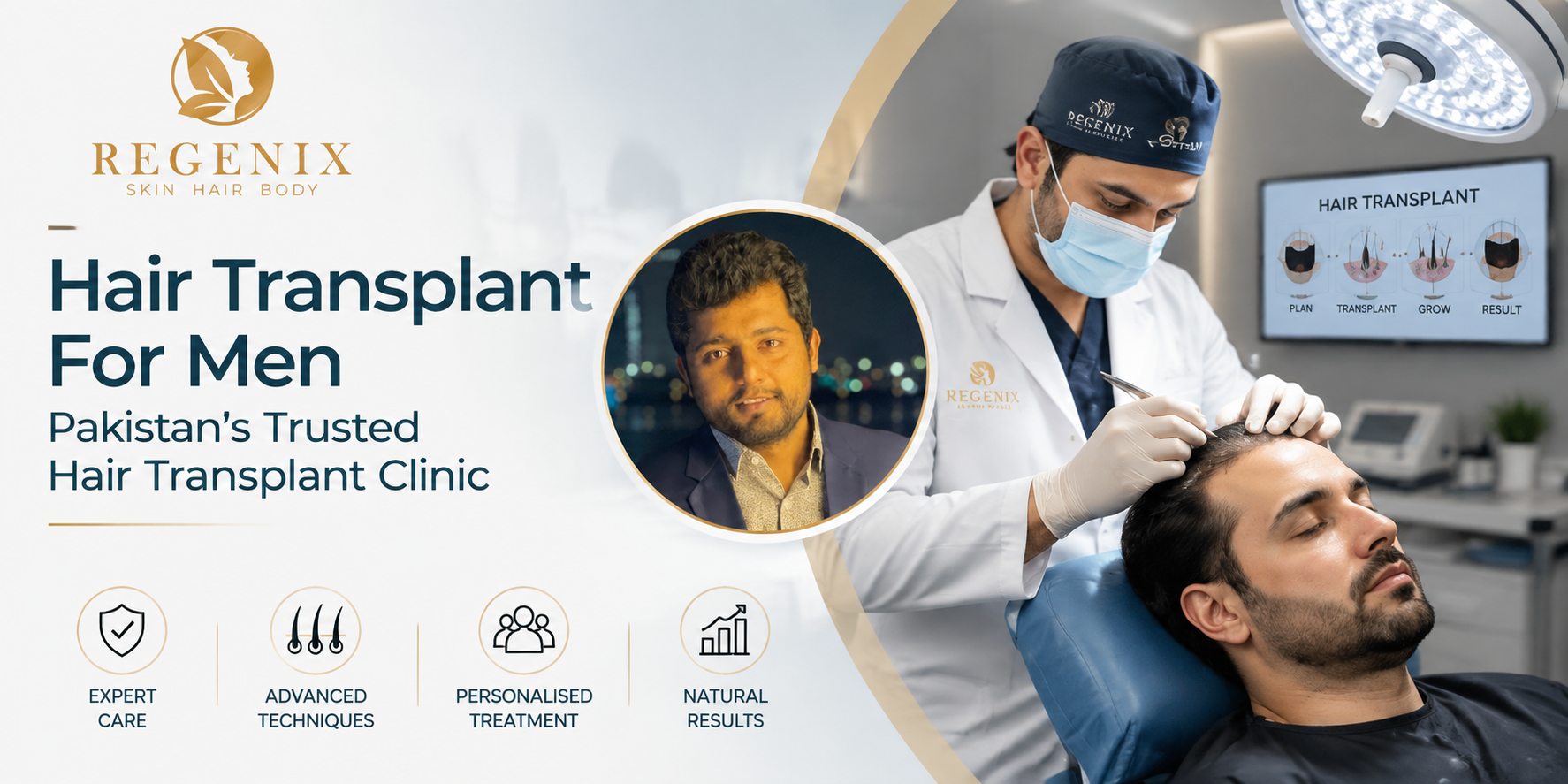
Regenix Aesthetic Clinic is a leading hair transplant and aesthetic clinic in Lahore, Pakistan, specialising in advanced hair restoration and dermatology treatments.
The clinic offers FUE, DHI, Sapphire FUE, PRP, PRGF, and Exosomes Therapy with personalized treatment plans designed for natural-looking hair restoration results.
Under the supervision of Consultant Dermatologist and Hair Transplant Expert Dr. Salman Haseeb Chaudhary, Regenix provides evidence-based aesthetic and medical care.
Patients seeking the best hair transplant clinic in Lahore can explore treatment options, costs, procedures, recovery timelines, and expert consultations at Regenix.
What Is a Male Hair Transplant?
A male hair transplant is a minimally invasive surgical procedure that provides permanent hair restoration by taking healthy hair follicles from the donor area, usually the back of the head or sides of the head, and placing them into bald areas or thinning areas such as the temples, hairlines, and crown areas. In male pattern baldness, also called androgenetic alopecia, the DHT hormone can cause susceptible follicles on the scalp to weaken, while donor follicles are often genetically resistant and DHT resistant to this hormone.
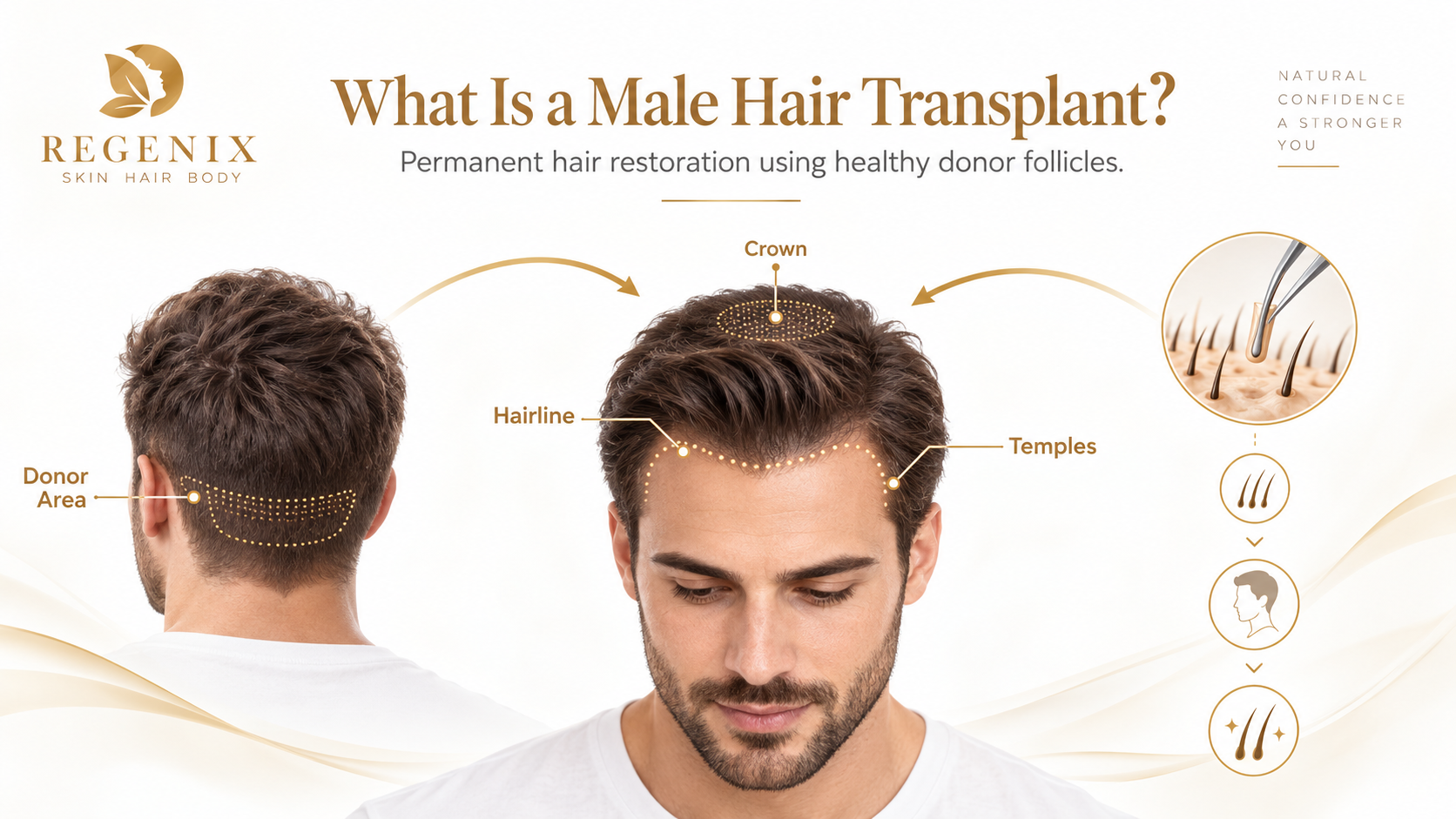
During hair transplantation, these resistant follicles are relocated, allowing the transplanted follicles and implanted hair follicles to continue growing and potentially provide long-lasting, permanent results. Unlike temporary fixes such as wigs, medications, or topical treatments, hair transplant for men is a clinically proven approach to hair loss when performed for suitable candidates, although individual outcomes and lifetime results can vary. At our clinic in Lahore, Pakistan, we also assess factors such as previous surgeries, existing scars, beard patches, and eyebrow thinning when planning hair restoration or a hair transplant in Lahore.
Best Dermatologist & Aesthetic Physician Pakistan
Dr. Salman Haseeb Chaudhary is a Consultant Dermatologist, Aesthetic Physician, and Hair Transplant Expert associated with REGENIX Clinic on Jail Road Lahore, Lahore, where his clinical practice covers clinical dermatology, hair restoration, hair transplant, scalp treatments, and advanced aesthetics.

Hair Transplant Techniques
Modern Hair Transplant procedures use different hair transplant techniques and advanced methods to move healthy follicles from the donor region to carefully planned recipient sites on the scalp. These techniques vary in extraction, implantation, and handling of follicular units and grafts, which can influence hairline design, density, coverage, recovery, and graft survival. The right transplantation approach depends on individual needs, but today’s surgical methods generally aim to preserve healthy follicles and produce balanced, natural results.
Advanced Hair Transplant Methods We Offer
In Pakistan, choosing the right hair transplant technique starts with assessing each patient’s scalp condition, hair type, existing hair coverage, and long-term coverage goals. Rather than using one technique for all patients, the transplant plan should be customised around the available follicles, scalp, and hair characteristics. Each major hair transplant technique has specific strengths, so our hair transplant methods are selected according to what can realistically provide suitable coverage for the individual patient.
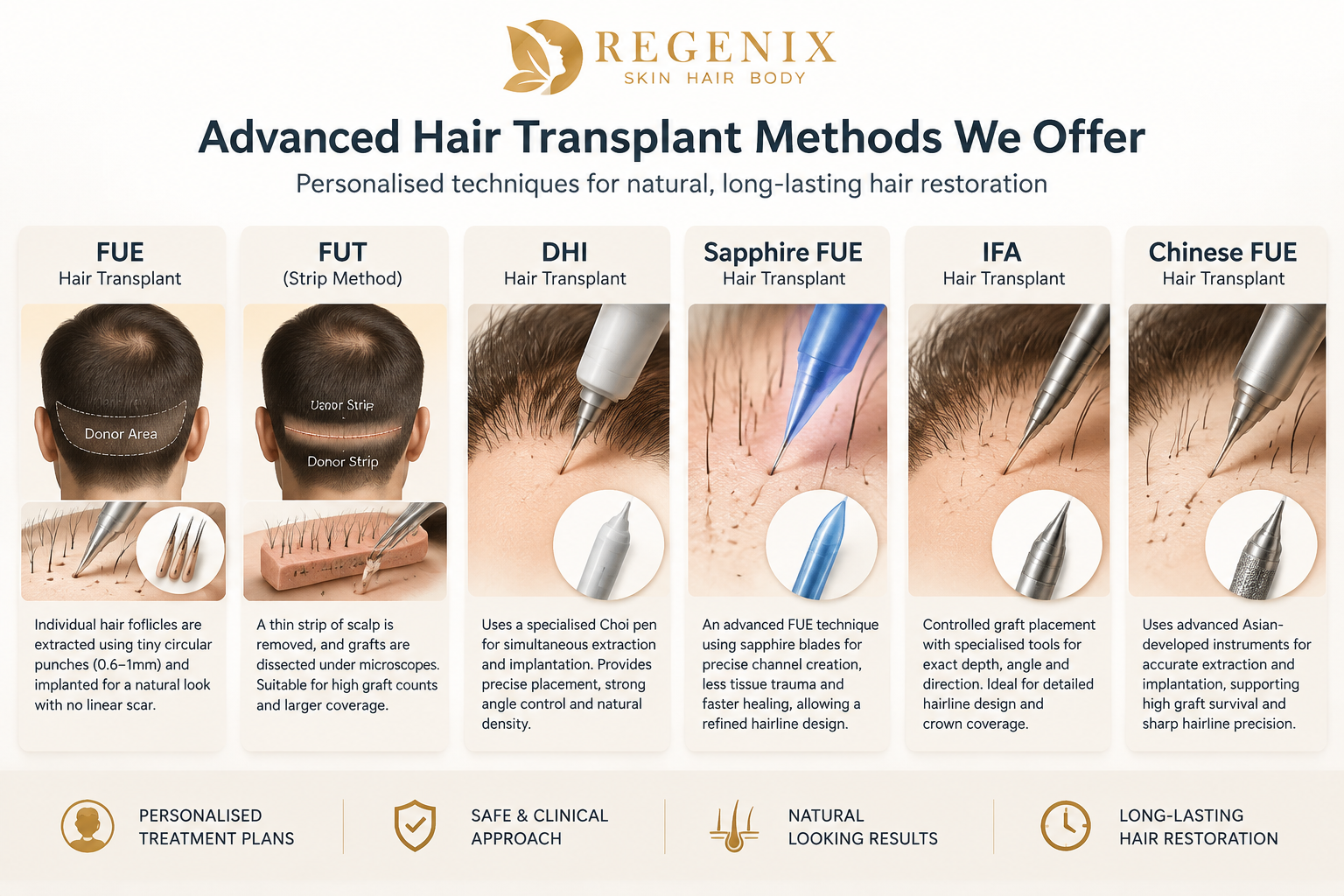
FUE Hair Transplant FUE Hair Transplant, or Follicular Unit Extraction, is a widely used hair transplant technique in which individual follicles are removed from the scalp using tiny circular punches, typically around 0.6–1mm. During FUE, careful follicle extraction produces individual grafts, which are then placed into prepared recipient sites through controlled implantation. Because circular punches are used instead of removing a strip of scalp, there is no linear scar, and many patients experience fast recovery, often with initial healing around a 7-day recovery period. Precise placement of the implanted follicles can help create natural density and natural results.
FUE Hair Transplant
Skin management, skin rejuvenation, advanced skin rejuvenation, laser treatments, CO2 Fractional Lasers, Morpheus8, PDRN therapies, PRGF, PRP treatments, Exosomes Therapy, HIFU or High-Intensity Focused Ultrasound, and other specialized medical treatments and specialized treatments. His work in facial aesthetics includes Botox, dermal fillers, thread lifting, face lifts, facial sculpting, anti-aging, and personalized anti-aging combinations intended to maintain natural facial contours and balanced facial contours. As an aesthetic specialist, his scope also includes body contouring, EMsculpt, liposuction surgeries, and other surgical treatments, non-surgical treatments, and aesthetic procedures.
In dermatology, treatment may address deep-pitted acne scars, acne scars, hyperpigmentation, uneven skin texture, broader skin texture concerns, skin diseases, and general skin diseases. His approach also emphasizes advanced aseptic techniques to help reduce infection risks during appropriate procedures.
Claims describing him as a lead supervising specialist, highly regarded, highly competent, having a professional track record supported by patient consensus, achieving 8–10 inches through a procedure, or delivering particular advanced laser-based aesthetic transformations and aesthetic transformations should be published only where the clinic has reliable evidence to substantiate them, since outcomes from complex skin rejuvenation and other treatments vary between patients.
FUT Hair Transplant (Strip Method)
FUT Hair Transplant, also known as the Strip Method, uses strip extraction to remove a thin strip of scalp containing healthy donor hair from the donor region. During FUT, technicians perform careful graft dissection under stereo-microscopes, separating the tissue into individual grafts while protecting the follicles. This hair transplant method can provide high graft counts and high graft yield, making it useful when large coverage is required in a single hair transplant session or single session.
For suitable patients, the ability to obtain many grafts from the scalp at once can also make it a cost-effective option.
DHI Hair Transplant
DHI Hair Transplant, or Direct Hair Implantation, uses a specialized Choi pen to extract follicles and implant follicles with controlled placement in the scalp. The method is often described around simultaneous extraction and implantation, while the implantation stage can use no pre-made channels in the conventional sense because the Choi pen precision allows graft placement directly during insertion. This provides strong angle control, supports precise hair density, and may allow superior density or highest density in suitable areas.
The controlled implantation can cause minimal trauma, while careful handling of follicles may support graft survival and faster graft survival. A no shaving option may also be possible for selected patients.
Sapphire FUE Hair Transplant
Sapphire FUE Hair Transplant is an enhanced FUE variant that uses sapphire gemstone blades, commonly called sapphire blades, instead of conventional steel blades when creating implantation channels. Their ultra-smooth edges allow precise channel creation in the scalp, with the aim of reducing tissue trauma and achieving less tissue damage during implantation. Combined with FUE, this approach can support faster healing while allowing detailed natural-looking hairline design. Precise positioning of follicles can help create a refined hairline and the premium finish expected from a carefully planned hair transplant, although individual healing varies.
IFA Hair Transplant
IFA Hair Transplant, or Implant Follicular Approach, focuses on controlled graft placement using specialised tools to manage the exact depth, angle, and direction of each graft during implantation. This level of precision and angle control can be particularly useful for detailed hairline design, dense packing, and crown coverage, where natural follicles must follow different growth patterns across the scalp. As a crown specialist approach, careful planning of the crown and hairline aims to improve overall naturalness.
Chinese FUE Hair Transplant
Chinese FUE Hair Transplant refers to an advanced Asian-developed extraction approach using Asian-developed instruments and other advanced tools for controlled extraction and implantation. Building on FUE, the technique focuses on careful handling of follicles and grafts, accurate precision, hair transplant density, and detailed hairline placement. Its specialized implantation instruments are intended to support high graft survival, high graft survival rates, and sharp hairline precision, helping create a sharp hairline and balanced density.
Actual graft survival and results vary between patients and depend heavily on surgical planning, follicle quality, and aftercare.
Why Hair Transplant Clinic?
A specialized hair transplant clinic brings medical planning and clinical care together for people experiencing hair loss. Instead of focusing only on hair transplant surgery, a good aesthetic clinic examines the scalp, hair, and available follicles before recommending suitable hair treatments, from non-surgical treatments and other aesthetic treatments to surgical interventions, transplant surgeries, and related cosmetic procedures. This makes the hair transplant journey and wider restoration journey more structured, with each treatment selected around individual needs and the goal of long-term hair restoration or permanent hair restoration.
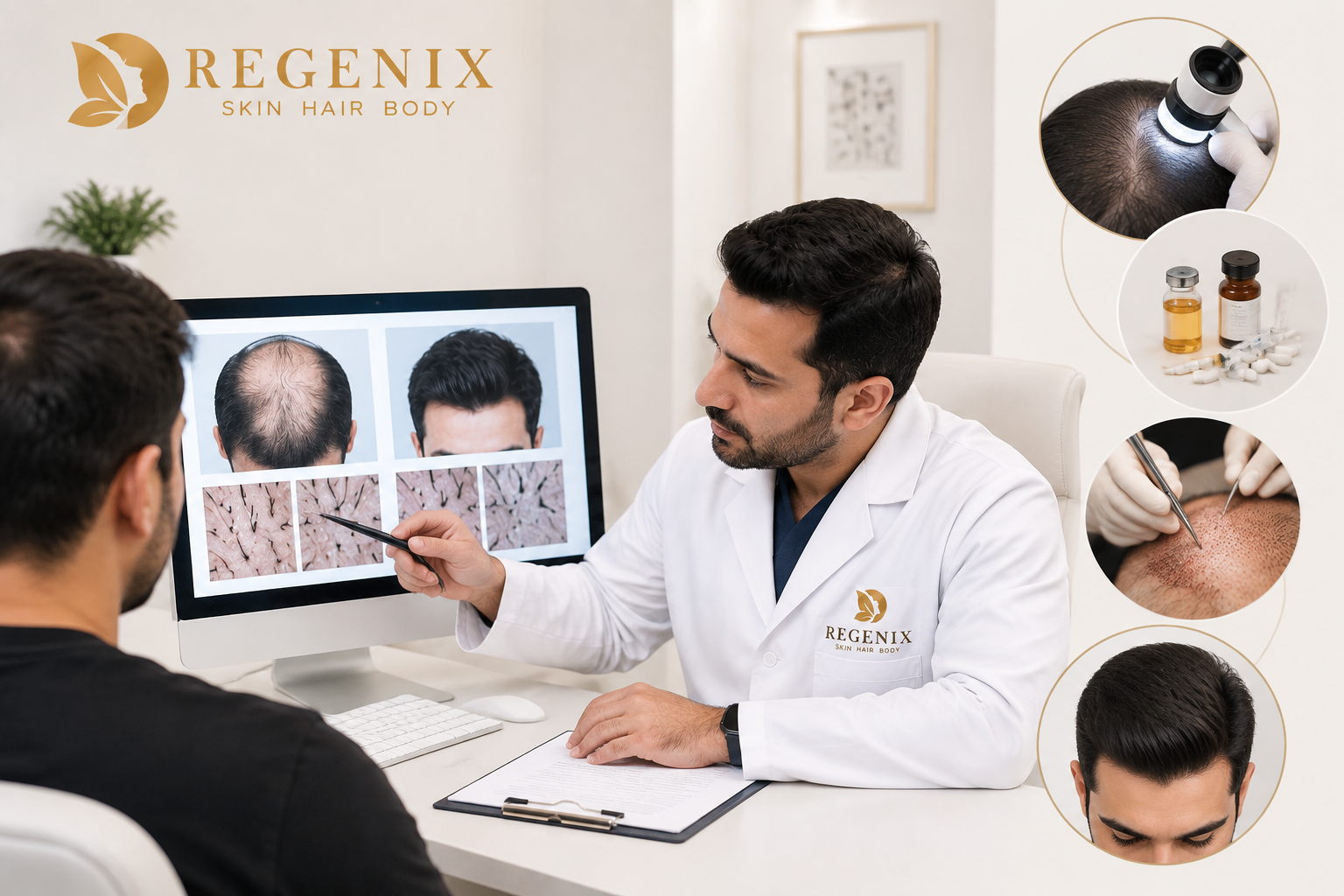
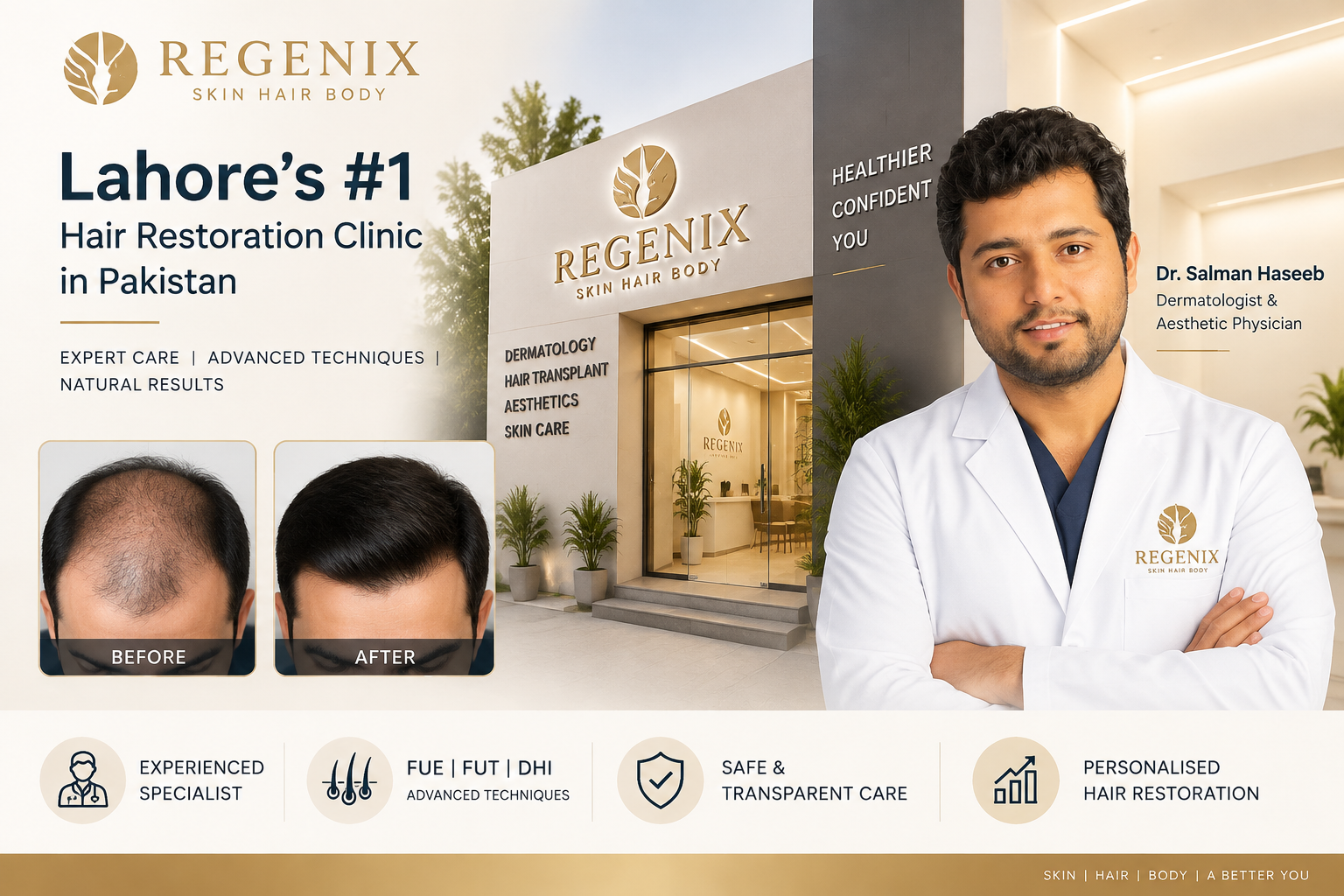
Lahore’s #1 Hair Restoration Clinic in Pakistan
Regenix Aesthetic Clinic is a Hair Transplant Clinic Lahore patients can consider for personalised hair loss treatments, hair restoration, and aesthetic treatments in Lahore, Pakistan. Under the leadership of Dr.Salman Haseeb, a Dermatologist and Aesthetic Physician, the team provides medical treatments, medicines, non surgical options, and surgical hair transplant surgeries, including FUE, FUT, and DHI, alongside other cosmetic surgeries and surgical interventions.
The focus throughout the hair restoration journey and treatment journey is careful medical restoration, safe treatments, a comfortable and as painless an experience as reasonably possible, transparent costs with no extra charges, and permanent hair restoration at a reasonable price. For patients concerned about their physical appearance or looking for reliable alternatives for hair loss, appropriate medical assistance and treatment selection can help achieve the best results possible for the individual, while the quality of hair transplant work and overall transplant work remain central to care.
Claims such as 99% safe or Pakistan’s largest aesthetic brand should only be used for an aesthetic brand when supported by verifiable evidence, since no medical procedure can responsibly be presented as completely risk-free.
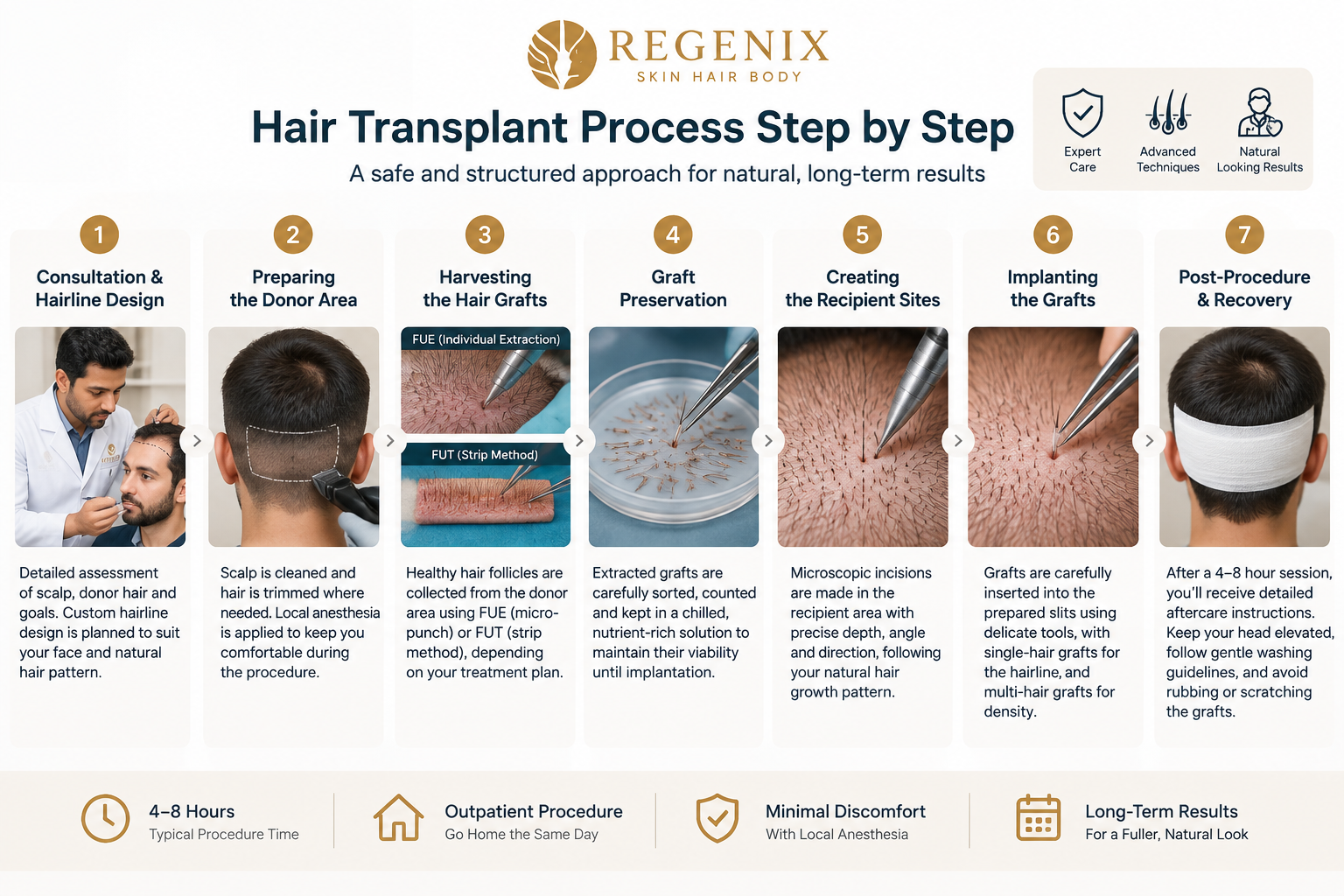
Hair Transplant Process Step by Step
A medical hair transplant is an outpatient procedure used to address thinning and baldness by moving healthy hair follicles from a donor site, usually the back of the head, to recipient areas. The hair transplant process can use different transplantation techniques, mainly Follicular Unit Extraction (FUE) and Follicular Unit Transplantation (FUT). With FUE, individual follicles or hair follicles are removed using a tiny punch tool, typically leaving microscopic dot scars; with FUT, a linear strip of skin is removed and examined under a microscope, which usually leaves a single linear scar.
The main clinical difference is how hair collection is performed, but both methods obtain donor hair and relocate hair follicles to areas needing coverage. The exact surgical procedure is selected according to the patient’s scalp, donor supply, and treatment needs.
Step 1: Consultation and Hairline Design
The process starts with a detailed consultation, where the doctor or surgeon evaluates the scalp, discusses the patient’s goals, checks donor hair density, and estimates the required coverage area and hair density. Based on the available donor hair, the surgeon maps the treatment area and draws custom hairline boundaries before surgery. Careful hairline design is important because a well-planned custom hairline should suit the face and existing hair pattern, helping the treatment achieve a natural-looking result and a balanced natural-looking final result.
Step 2: Preparing the Donor Area
On the day of procedure, donor area preparation begins when the medical team cleans the scalp and trims hair where necessary, particularly around the back of the head or sides of the head. A local anesthetic is then used to numb the donor area and recipient areas, creating a clean scalp environment for surgery. This anesthesia helps keep pain controlled so most patients experience minimal pain throughout the procedure, while both donor and recipient areas remain prepared for the next stage.
Step 3: Harvesting the Hair Grafts
During harvesting, the surgeon collects healthy hair units from the donor zone. With FUE, a micro-punch device, commonly around 0.6mm to 0.9mm, is used during graft extraction to pull individual follicular units from the donor area. These individual follicular units, or follicular grafts, are then handled carefully as hair grafts.
With FUT, also known as the strip method, the surgeon removes a single narrow strip of hair-bearing skin and closes gap with sutures; medical technicians then use high-powered microscopes to isolate follicles and separate the strip into individual follicular units.
Step 4: Graft Preservation
After extraction, graft preservation becomes critical because the removed follicles are vulnerable follicles outside the body. Trained technicians sort and count the grafts, then place the hair grafts in a chilled solution or specialized nutrient-rich solution. The preservation solution helps maintain the right hydration level and temperature level before implantation. Careful control of hydration and temperature helps protect live hair follicles, support follicle survival, improve the survival rate, and maximize survival until placement.
Step 5: Creating the Recipient Sites
Next, the surgeon or doctor prepares the recipient area by making microscopic incisions or microscopic slits across the thinning areas and balding areas of the scalp. Using a tiny needle or fine surgical blade, the surgeon creates precise recipient sites, carefully controlling each incision’s depth, angle, incision direction, and hair direction. These surgical incisions and incisions are planned around the patient’s natural hair growth pattern, because correct positioning helps the new hair follow realistic hair growth as it develops.
Step 6: Implanting the Grafts
During implantation, the medical team begins to insert grafts into the newly made slits using delicate forceps or specialized placement tools. The surgeon carefully controls graft placement, with single-hair grafts commonly used around the frontal hairline for greater softness, while multi-hair grafts can be strategically positioned behind the hairline to improve density and volume. Careful handling of the live grafts, hair grafts, and follicular grafts throughout surgery helps protect them while creating a more natural distribution.
Step 7: Post-Procedure & Recovery
After a typical 4-to-8-hour session, the post-procedure phase focuses on graft protection, healing, and careful scalp cleaning. The clinic provides detailed aftercare instructions and recovery instructions, which may include keeping an elevated head, sleeping elevated to help manage swelling, and sometimes using a temporary protective bandage or protective bandage around the donor region. During the first few days and first week, patients usually follow a strict protocol for hair washing, washing hair gently, and avoiding rubbing, scratching, or unnecessary touching grafts and newly placed grafts. Following proper aftercare after surgery supports safer recovery while the scalp settles.
Hair Transplant Growth Timeline
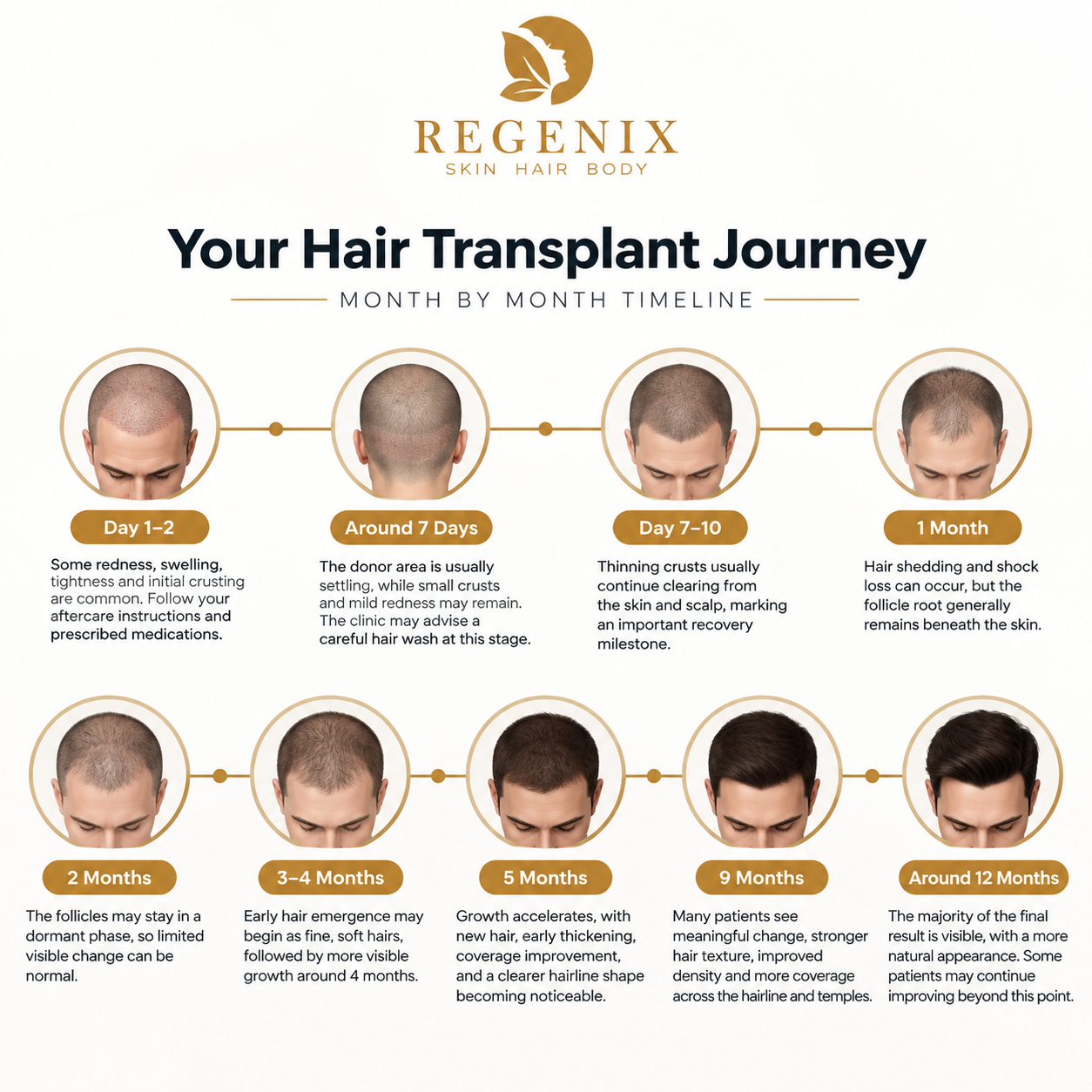
The hair transplant growth timeline is a gradual process in which the transplanted hair changes as the scalp, grafts, and follicles heal. After a hair transplant, the donor area and recipient area first go through recovery, followed by temporary shock loss and then new hair growth. Over the following months, improvements become noticeable in the hairline, coverage, density, and hair texture, with the goal of a natural hairline and permanent results. Because every patient heals differently, this growth timeline is best understood as a general month-by-month guide rather than an exact schedule.
Eligibility
Hair transplant eligibility depends on more than age or the amount of visible hair loss. A suitable candidate for a hair transplant usually needs a reliable donor area, enough donor supply, and healthy hair or dense hair that can be moved to thinning parts of the scalp. During a clinical assessment, the doctor considers the cause of hair loss, including androgenetic alopecia or male pattern baldness, along with healing, realistic expectations, and overall suitability for hair restoration. Options such as DHI, hair transplant without shaving, or using body hair may also be considered when appropriate.
Are You a Good Candidate for Hair Transplant?
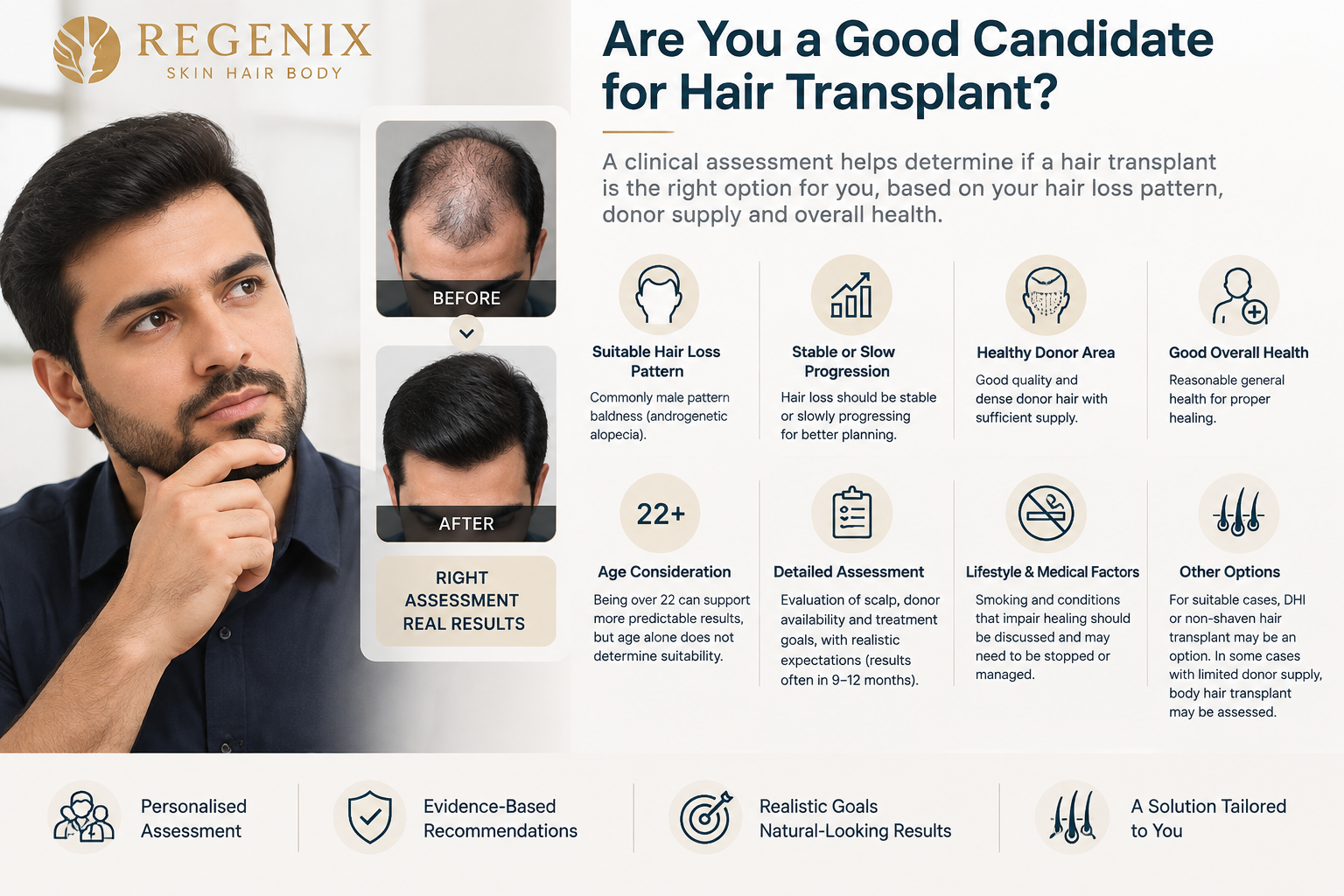
Strong candidates for a hair transplant commonly have male pattern baldness or androgenetic alopecia, stabilised hair loss or slowly progressing hair loss, healthy dense hair in the donor area, and reasonable general health for proper healing. Being over 22 years of age can support more predictable planning, but age alone does not determine candidate suitability; a hair transplant for young men requires careful planning because future hair loss may continue.
• A clinical assessment checks the scalp donor supply, donor availability, donor hair, and whether there is a sufficient donor area to support the expected transplant results and hair restoration goals. Patients should also have realistic expectations, understanding that gradual results often develop over around 9–12 months and sometimes longer.
• Smoking and conditions that impair healing should be discussed before treatment, and the doctor may recommend stopping or managing certain factors for the required period. For a suitable condition, DHI or a hair transplant without shaving, also called a non-shaven hair transplant, may be an option.
• Patients with limited donor supply may sometimes be assessed for a hair transplant using body hair or body hair transplant, but suitable body hair does not automatically replace good scalp donor availability, so the final recommendation should follow an individual assessment.
Not Sure If You Qualify
The safest way to know whether you qualify for a hair transplant is through a professional consultation and clinical assessment. A proper transplant evaluation reviews your hair loss, scalp, donor area, available donor hair, and overall suitability for hair restoration. Rather than assuming eligibility, this assessment helps establish your qualification and whether you are an appropriate hair transplant candidate based on your individual condition.
Pricing
Hair transplant pricing is usually based on the number of grafts, the level of hair loss, and the chosen transplant technique, rather than one fixed price for every patient. The hair transplant cost may also reflect cost per graft, surgeon expertise, and available clinic facilities. A proper consultation helps determine the required graft count before treatment, allowing the clinic to provide a clearer pricing guide, complete packages, transparent pricing, and preferably no-hidden-fee pricing in PKR.
Hair Transplant Cost in Pakistan
The hair transplant cost in Pakistan depends mainly on the extent of hair loss, number of grafts required, technique used, surgeon's expertise, and the clinic’s facilities. As an estimated pricing guide, 1,000–1,500 grafts may be suitable for earlystage recession, temple thinning, temples, or minor hairline refinement, with pricing starting around PKR 80,000. For moderate baldness, mid-scalp restoration, or broader hairline work, 2,000–3,000 grafts may fall within PKR 90,000–115,000, while 3,500–4,000 grafts for advanced hair loss, wider scalp coverage, or crown coverage may cost around PKR 95,000– 130,000.
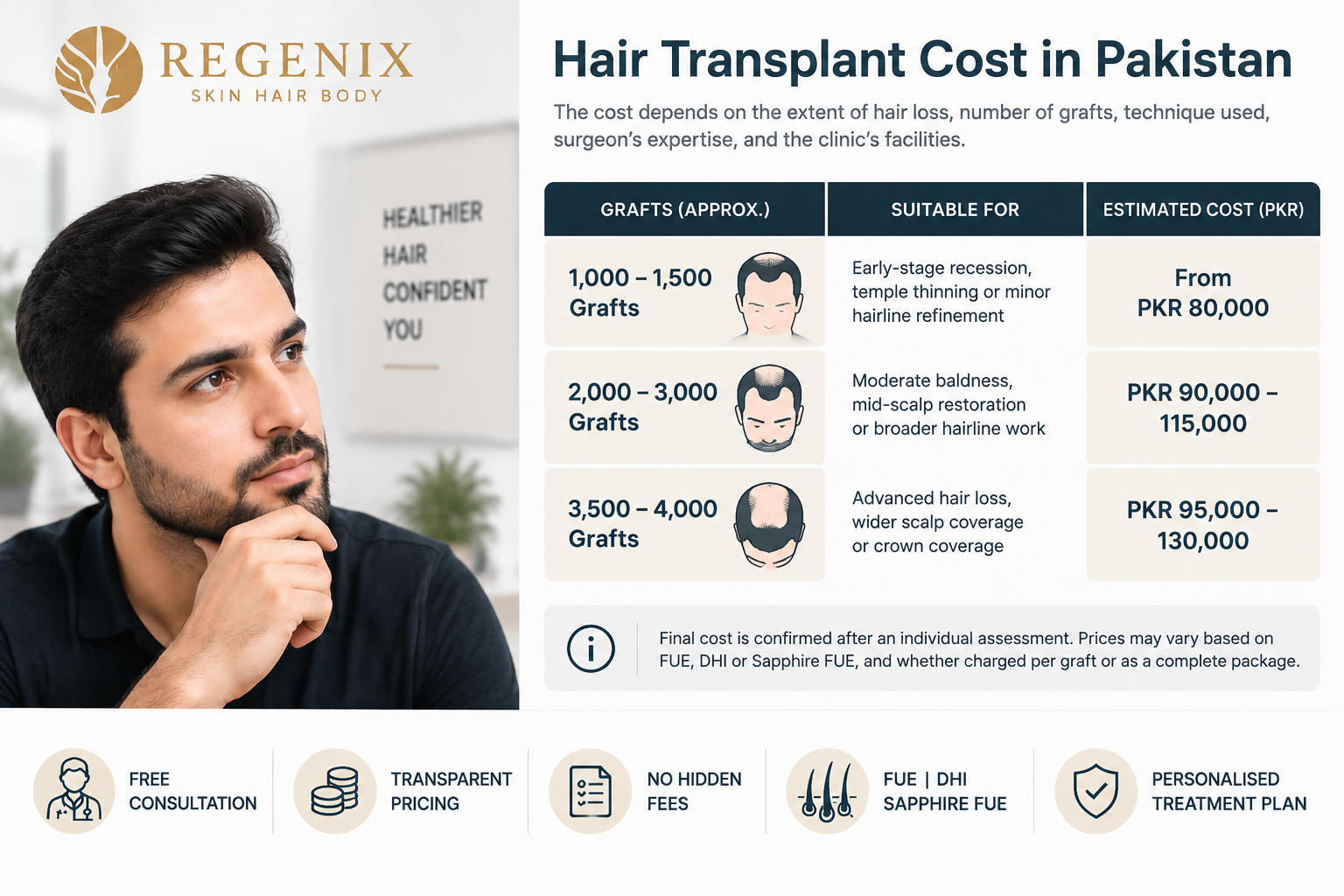
The most common range can vary depending on whether FUE, DHI, or Sapphire FUE is selected. Some clinics calculate the hair transplant price per graft, while others provide transplant packages or complete packages instead of charging strictly per graft. A free consultation can establish the expected grafts, crown requirements, and overall cost before the hair transplant, helping provide transparent pricing and no-hidden-fee pricing; however, the final hair transplant cost should be confirmed after an individual assessment because prices and treatment needs vary.
Hair Transplant Before and After
A hair transplant before-and-after comparison is best understood as a gradual hair transplant journey, not an instant change. Immediately post-op, the scalp begins recovery and donor healing, while the implanted grafts settle into place. Temporary shock loss may cause some transplanted hair to shed, but new hair growth can gradually improve the hairline, density, and coverage over the following months.
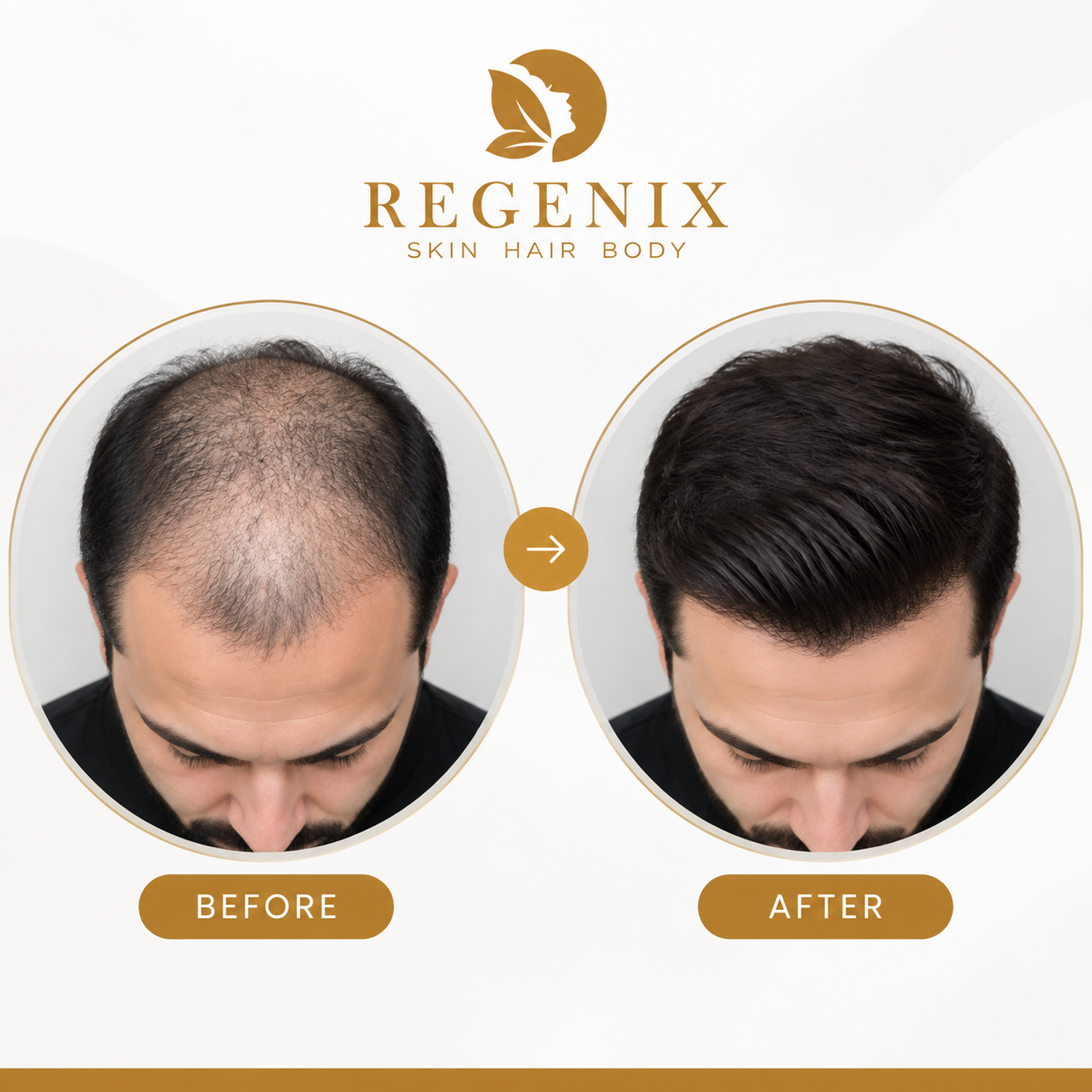
Tracking hair growth progress helps patients understand how hair transplant results develop toward a natural look, with mature permanent hair and the final result of hair restoration commonly assessed around 12 months or later.
Hair Transplant Growth Chart
The hair growth chart can be followed day by day at first and then month by month: Day 2 is the early Post-Op stage, when mild swelling, redness, and grafts crusting may be visible as scalp healing begins. During Wash & Settle, the first gentle wash is performed according to clinic instructions, and by Week 2, most crusts lift as recovery and donor healing progress. Around Month 2, Shock Loss may be noticeable as some transplanted hair sheds, while the roots remain active beneath the skin.
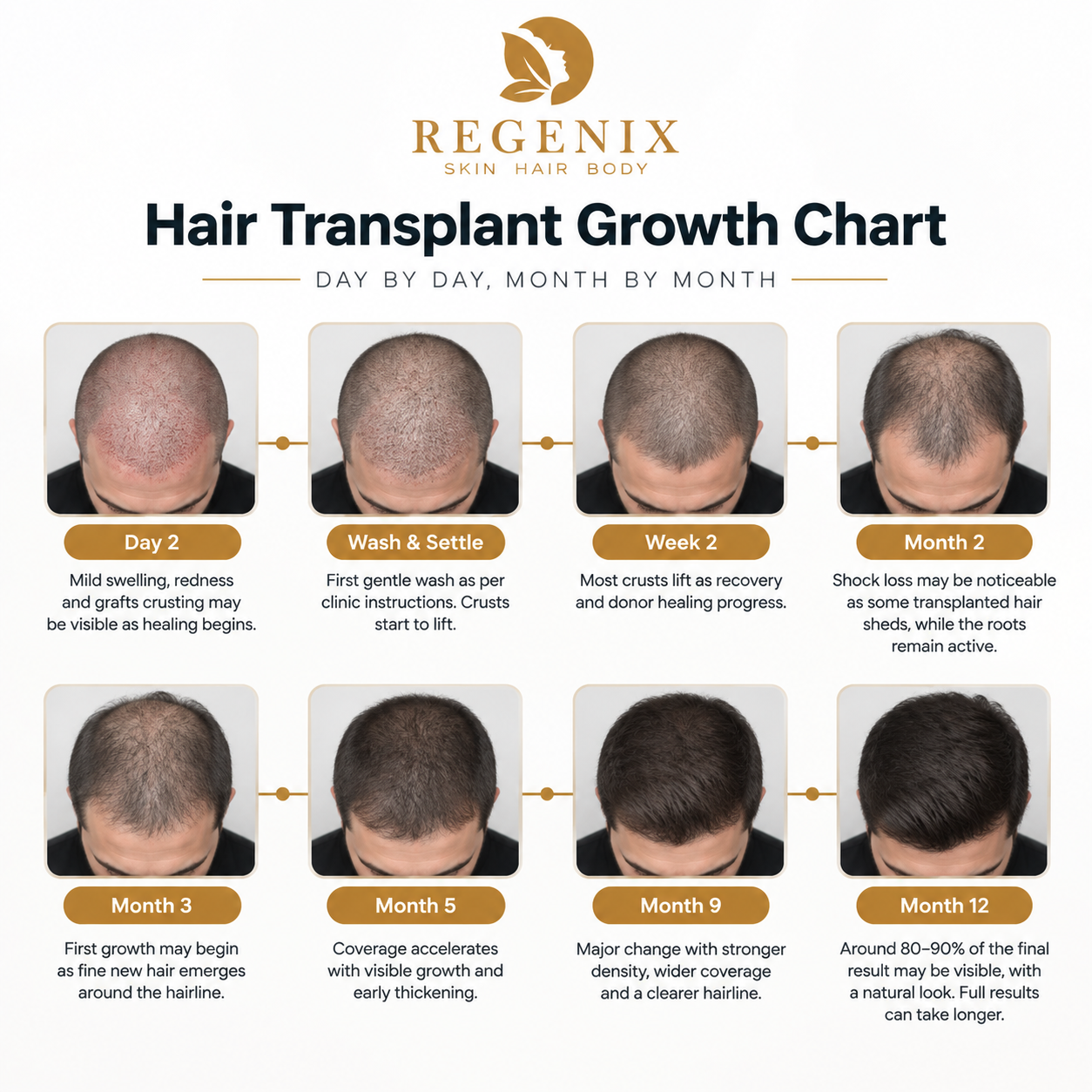
By Month 3, First Growth may begin as fine new hair emerges around the developing hairline. At Month 5, coverage accelerates, with visible hair growth, density building, and early Thickening of the natural hair. By Month 9, many patients experience a Major Change, with stronger density, wider coverage, and the hairline visible more clearly.
At Month 12, roughly 80–90% of the expected final hair transplant result may be visible for many patients, with a more natural result and increasingly mature permanent hair; however, full permanent hair, a completely natural look, and the true final result can take longer depending on the individual, treated area, and growth pattern.
Before Your Procedure
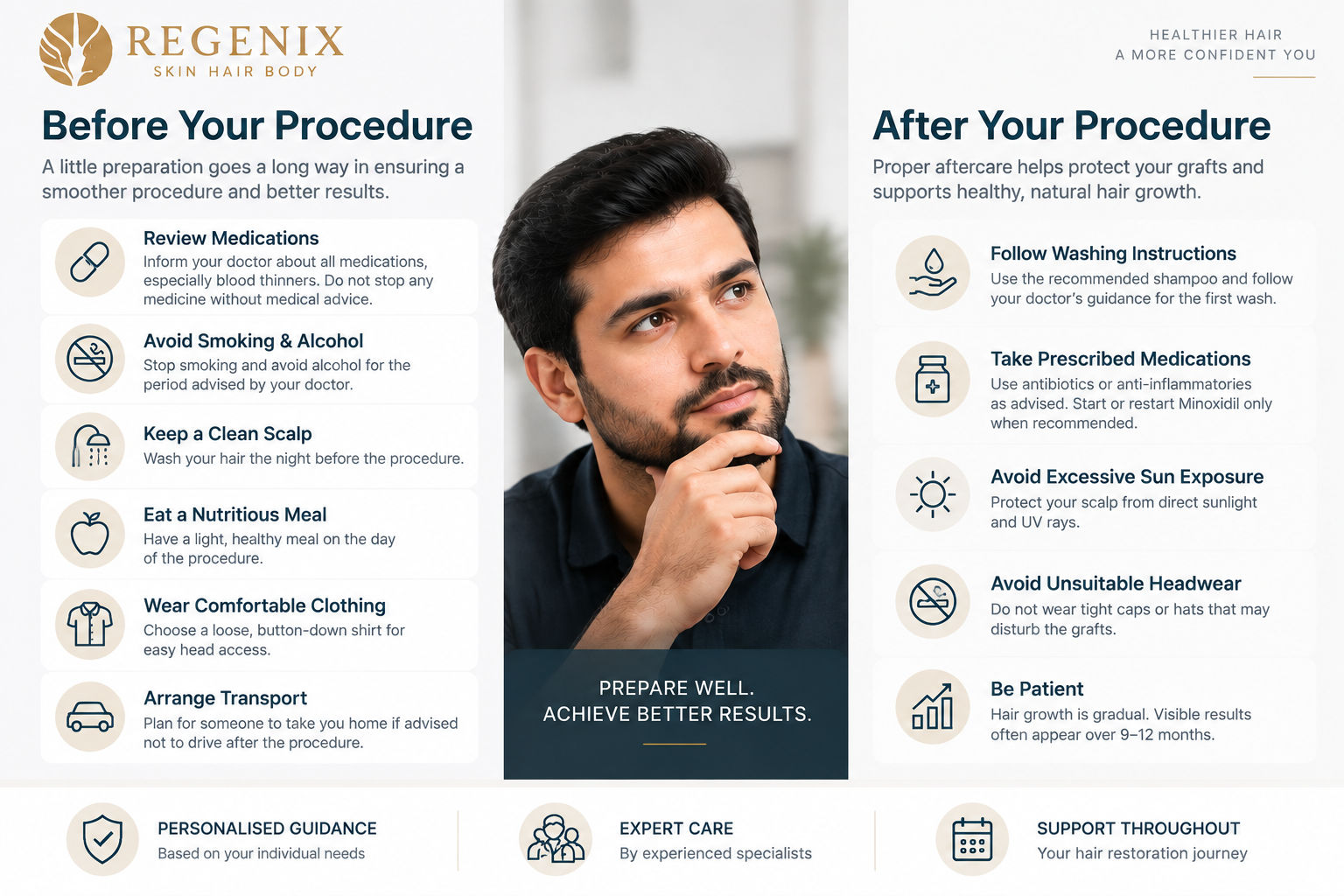
Good pre-procedure preparation helps make a hair transplant procedure smoother and supports graft survival. Before the appointment, your hair transplant doctor may review medications, prescription drugs, and especially blood-thinning medications that could affect the session; never change them without medical advice. Patients may also be advised to avoid smoking and alcohol, keep a clean scalp and hair, eat a nutritious meal, wear loose clothing, and arrange transport home.
Following these steps helps prepare the scalp for treatment and protects the donor grafts and newly placed grafts.
Pre-Procedure Guidelines
Follow the clinic’s pre-procedure guidelines carefully because individual instructions can vary. Your hair transplant doctor should review all medications, prescription medications, and prescription drugs before the hair transplant; do not selfdiscontinue blood-thinning medications or other medicines, even if general guidance mentions stopping certain medications around 7 days before the procedure.
• Avoid smoking and alcohol for the period advised by your doctor, and on the night before, wash hair thoroughly so you arrive with clean hair and a clean scalp. On the day of procedure, have a light nutritious meal, wear a buttondown shirt or other comfortable loose clothing that provides easy head access, and prepare for a potentially lengthy session.
• Arrange transport home if the clinic advises you not to drive afterward. Careful preparation can support the grafts, overall survival rates, and graft survival rates, but outcomes vary between patients.
After Your Procedure
Proper aftercare after a hair transplant focuses on graft protection, safe healing, and comfortable recovery. The recipient area, grafts, and scalp are delicate during the early post-procedure period, so patients should follow their doctor regarding the first hair transplant wash, use of medicated shampoo, and prescribed medications such as antibiotics or antiinflammatories when clinically appropriate. Minoxidil should only be started or restarted when advised.
Protecting the scalp from excessive sunlight and UV exposure, managing swelling, and avoiding unsuitable headwear can reduce unnecessary disturbance to newly implanted grafts.
Hair Transplant Healing Process & Aftercare
During the early healing phase, particularly the first 10–14 days, the recipient grafts and other healing grafts remain delicate, making careful post-transplant care essential. For the first few nights, patients may be advised to sleep with an elevated head to help reduce swelling, while avoiding any attempt to touch, rub, or scratch the recipient area, as unnecessary contact can cause graft damage to vulnerable grafts.
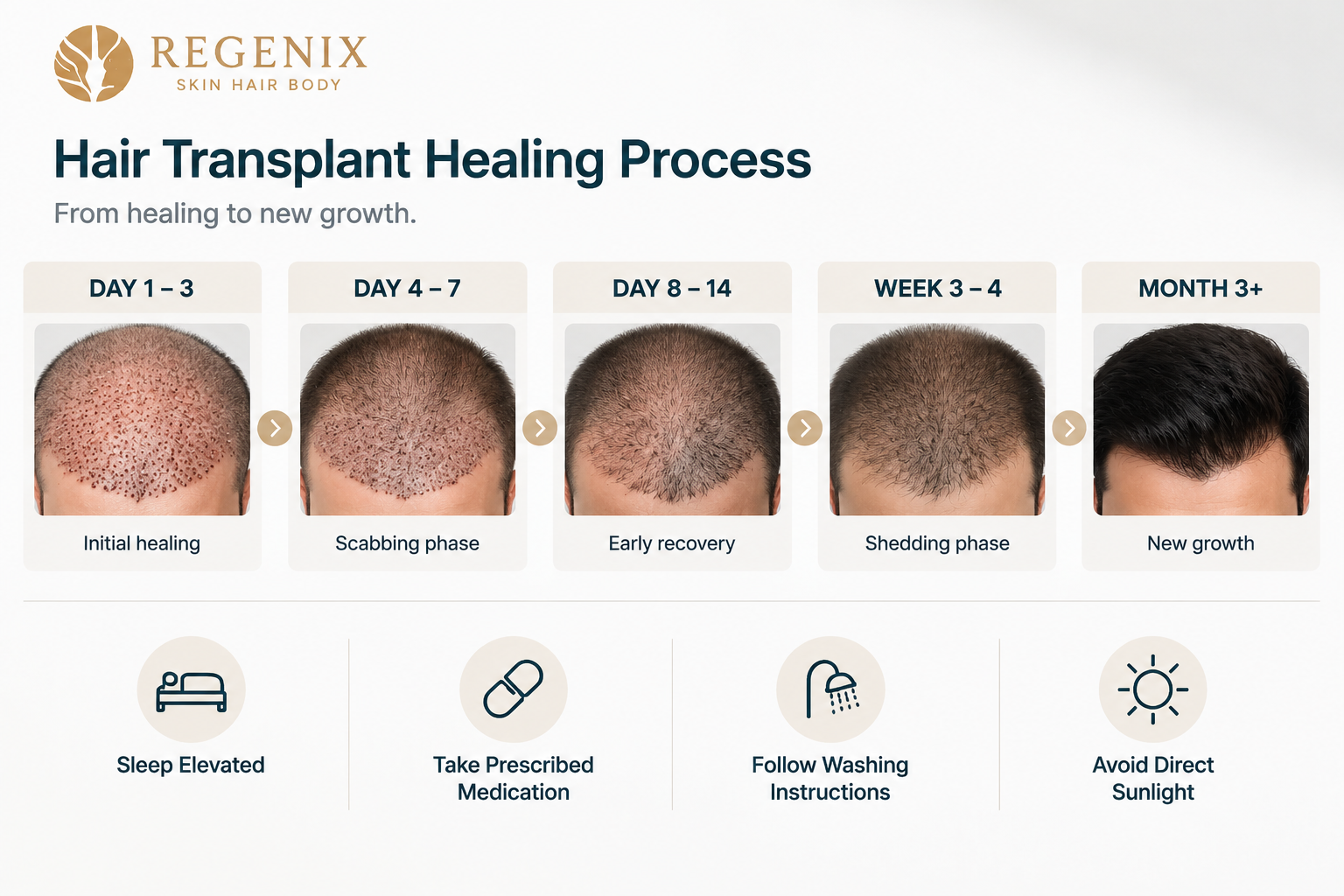
• Follow the clinic’s medication schedule for any prescribed medications, including antibiotics or anti-inflammatories, and ask the doctor when minoxidil can safely be used. The first hair transplant wash and subsequent hair washing should follow the clinic instructions, often using a recommended medicated shampoo rather than aggressive washing.
• During roughly the first 7 days to 2 weeks, avoid tight caps, helmets, or other headwear that could press against the grafts. Limiting direct sunlight, sunlight exposure, and excessive UV exposure for at least the early 2–3 weeks, or for however long your doctor recommends, can also help protect the healing scalp and reduce unwanted pigmentation changes.
• Following these steps supports the overall healing process, recovery, healing, and long-term graft protection after a hair transplant.
10 Reasons to Choose Our Hair Transplant Clinic
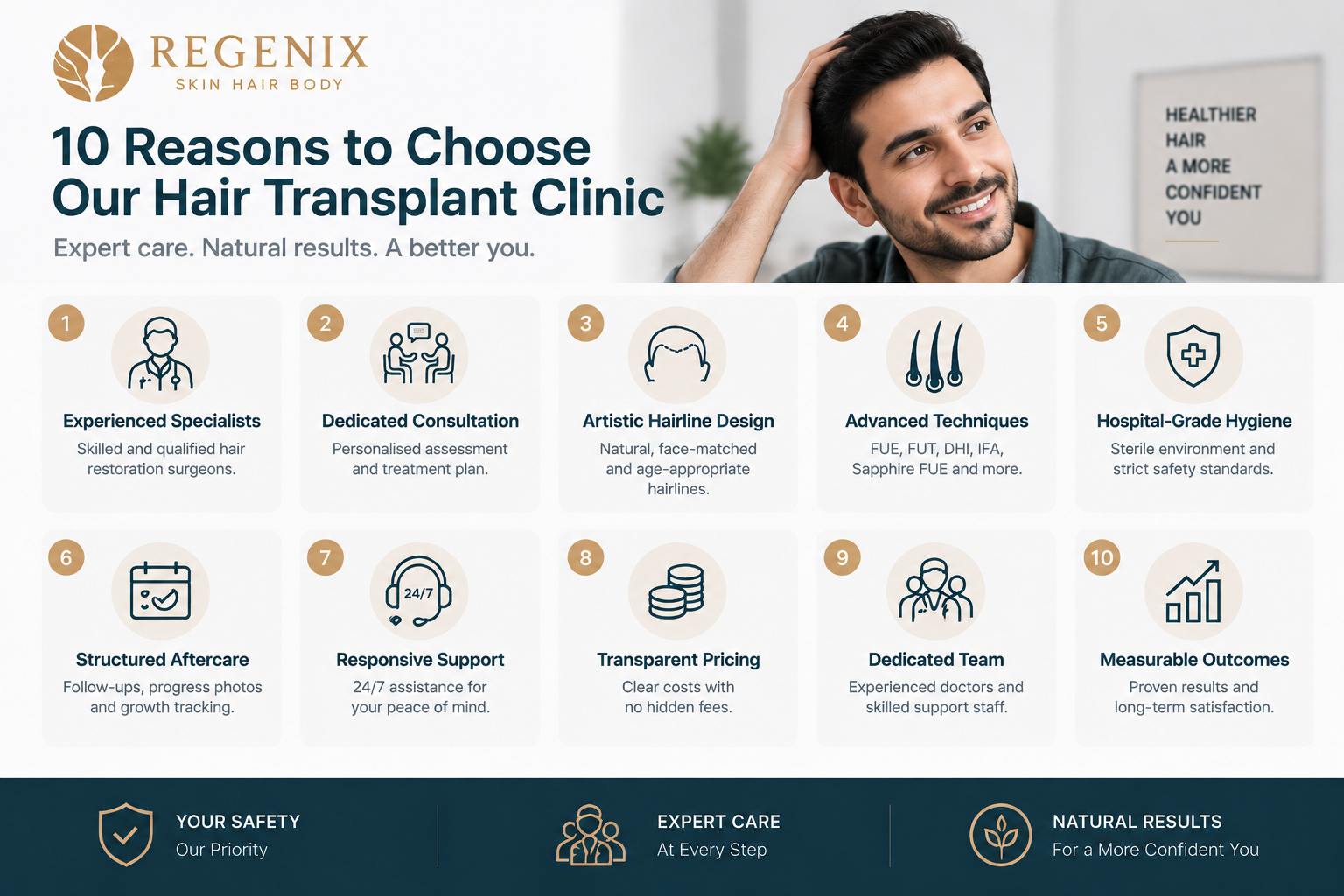
1. Experienced Hair Restoration Specialists
Access to experienced surgeons, expert surgeons, lead specialists, and a fully qualified hair restoration specialist with strong surgical experience and, where documented, 15+ years or a decade of dedicated experience.
2. Dedicated Consultation
A dedicated consultation where the consultation step covers donor grafts, goals, and the most suitable hair transplant technique.
3. Artistic Hairline Design
Artistic hairline design with face-matched hairlines and age-appropriate hairlines.
4. Advanced Hair Transplant Techniques
Access to FUE, FUT, DHI, IFA, Sapphire FUE, and Chinese FUE where clinically appropriate.
5. Hospital-Grade Hygiene
Hospital-grade hygiene, clear operating standards, and a sterile environment designed to provide a safe environment for every hair transplant procedure.
6. Structured Aftercare Programme
A structured aftercare programme, monthly follow-up reviews, progress photography, and a personalised hair transplant growth chart to document the healing process and post-surgery progress.
7. Responsive Patient Support
Responsive patient support, including 24/7 patient support or around the clock assistance where the clinic genuinely provides it.
8. Transparent & Affordable Pricing
Transparent affordable pricing and no hidden fees, with the hair transplant cost in Lahore explained before treatment.
9. Dedicated Hair Transplant Team
Experienced hair transplant doctors in Pakistan, including a dedicated hair transplant doctor, hair transplant specialist, supporting technician team, and specialists focused on long-term hair restoration.
10. Commitment to Measurable Outcomes
A commitment to measurable outcomes for patients seeking a hair transplant in Pakistan or a trusted hair transplant clinic Pakistan.
Conclusion:
Choosing the right hair transplant clinic is essential for achieving natural-looking and long-lasting hair restoration results.
Regenix Aesthetic Clinic Lahore provides advanced FUE and DHI hair transplant solutions with personalized treatment plans guided by experienced specialists.
Book a consultation today to understand your hair restoration options, expected results, and the most suitable treatment approach for your needs.